New Doors · Brampton
High-Lift Garage Door Conversion
Your new vehicle lift fits the floor plan, but the open garage door crosses the space above it. The ceiling is high enough; the standard track simply turns too soon and leaves the panels hanging over the raised vehicle.
High-Lift Garage Door Conversion
In plain words
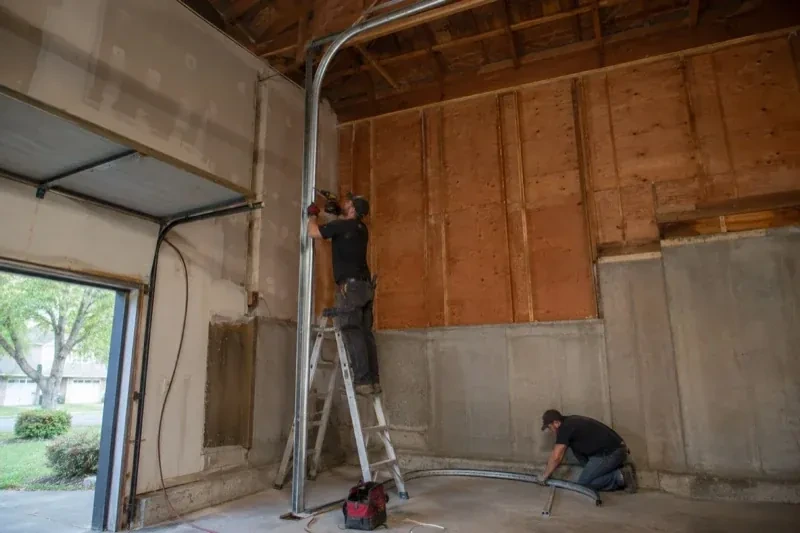
High lift sits between standard lift and full vertical lift. The door first travels upward along extended vertical tracks, then follows a curved transition and finishes horizontally. That makes it useful where the ceiling is higher than the opening but there is still room behind the door for horizontal panels. The available dimension is shaped by ceiling obstructions, spring and shaft space, track radius, door height and service access. A site assessment turns those limits into a practical clearance figure before parts are specified.
How the visit goesA taller van clears the closed opening comfortably, then loses useful space when the door is raised because the bottom section hangs below the ceiling. The issue is the open position rather than the doorway height.
Brampton
How the visit goes
Review the counterbalance as a system
The existing springs are not judged by appearance alone. Door weight, added vertical travel, drum geometry, cable path, shaft length and desired cycle characteristics all shape the new counterbalance specification. The technician records spring tags where present, shaft diameter, bearing locations, drum type and cable condition, then uses the proposed layout to calculate the replacement set. This system review is what lets the door feel controlled from floor to open position, even though the panels now follow a substantially different route.
Install the calculated spring assembly
Torsion springs are chosen from the measured door weight, high-lift dimension, drum profile and system layout. The shaft, centre support, end bearings, stationary cones and winding hardware are assembled in their planned locations with room left for inspection. Trained technicians apply spring tension using controlled tools and the design information for that door. Initial settings are only the starting point; the final adjustment follows manual balance observations. This method connects stored spring force to the finished geometry instead of carrying over assumptions from the former standard-lift arrangement.
Seasonal observation without adjustment
Temperature and humidity shifts can change lubrication behaviour, door weight and how materials move, while road salt and moisture may reach lower hardware. From a safe position, look for smooth travel, an even bottom edge and cables that remain neatly seated. Listen for a new scrape or repeated contact at the transition. Cleaning accessible track surfaces and following the manufacturer-listed lubrication points supports regular care. Spring, cable, drum and bottom-bracket changes remain technician work because those components carry the counterbalance load.
High-Lift Garage Door Conversion
In the van
- Braced back hangs
- Torsion shaft
- Calculated torsion springs
- Centre bearing support
- High-lift cable drums
What affects the quote
Same fees day, night or weekend
1Documentation and handover detail
Layout drawings, component records, clearance measurements, control demonstrations and recorded balance or safety tests determine the closeout material included with the project.
2Hardware finish and corrosion exposure
Material finish and environmental exposure, including seasonal moisture or road-salt conditions, can shape component selection and the ongoing care requirements for installed hardware.
3Required open-door clearance
The target space above a raised vehicle, lift or work area determines how much additional vertical travel the design must create and which layouts are worth evaluating.
High-Lift Garage Door Conversion: questions
What measurements are taken before a quote?
Measurements include finished opening width and height, headroom, sideroom, backroom, ceiling elevation, obstruction locations and the desired clear zone. The technician also records door dimensions and weight information, track and shaft positions, spring and drum details, framing or attachment conditions, and opener placement. Photos and equipment plans help connect those measurements to the intended use.
Can storage remain above or beside the door?
Storage can share the garage when it stays outside the door's movement and service envelope. The layout accounts for panels, rollers, tracks, shaft, springs, cables, operator and slight movement during operation. At handover, the technician can mark areas that should remain accessible. Planning cabinets or racks from those boundaries helps preserve both useful storage and orderly future maintenance access.
Can decorative hardware or added insulation affect the design?
Anything that changes door weight can influence counterbalance selection. Overlay trim, reinforcement, glazing, insulation additions and multiple coating layers are therefore recorded during assessment. If weight is added after conversion, the manual balance should be reviewed. Sharing planned door upgrades early lets the spring, drum and cable design reflect the configuration that will actually be operated.
Installation & Upgrades
- Insulated Steel Garage Door InstallationThe room above your attached garage stays chilly while the steel door below feels cold to the touch.
- Wind-Rated Garage Door ReplacementYour building designer has supplied positive and negative pressure values for the garage opening.
- Carriage-House Garage Door InstallationTwo garage openings sit side by side, and small differences in window spacing or decorative…
High-Lift Garage Door Conversion near you
The services below are the ones we perform most often for garage doors in Brampton. Springs and cables top the list, followed by opener repairs, roller and hinge replacement, seal and weatherstrip work, balance and safety adjustments, remote programming and, when the time comes, new doors.