Garage Doors · Brampton
Reading for homeowners
The guides below are the explanations we give on site, written down. They cover the parts, the wear, the seasons and the upgrades, so you can revisit them whenever the door raises a question.
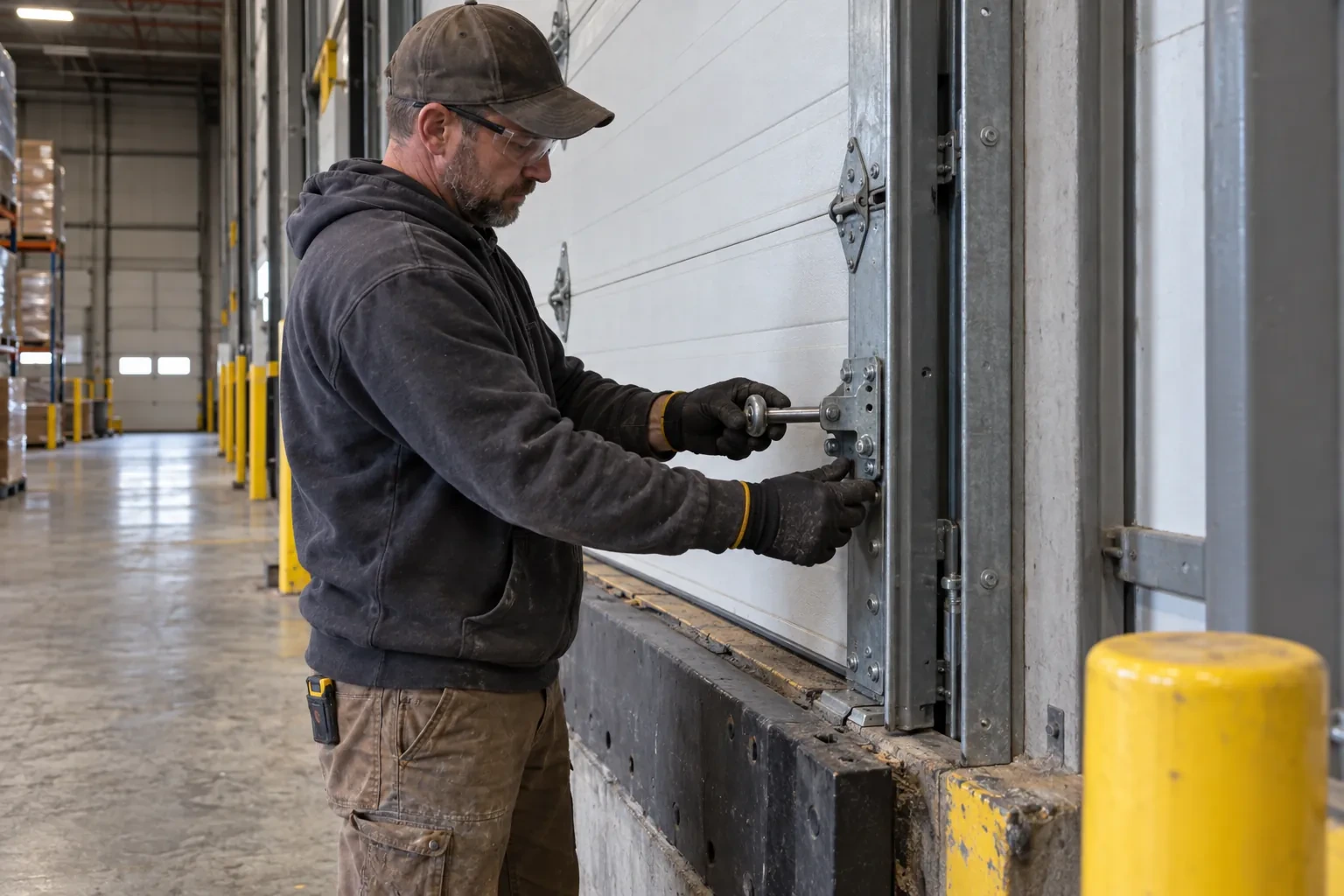
- Issue 1Garage Door Track Repair or Replacement: what the visit coversThe bottom foot of a garage door track has a hard life in this climate. Slush and salt drip off the car and pool exactly where the bottom rollers sit, the jamb brackets and channel rust and thin, and…Read
- Issue 2Garage Door Remote and Keypad Programming: comparing quotesRoughly half a minute on most openers. Press and release the button, then press the remote button you want to use until the opener light blinks or the unit clicks.Read
- Issue 3Garage Door Roller Replacement: what to note firstThe door shudders as it rises, worst where the track bends from vertical to horizontal. Watching from inside, you can see one section rock from side to side while the others sit still, and the whole…Read
What people ask us
Repair & Maintenance
Is the inspection different for an older detached garage with springs along the tracks?
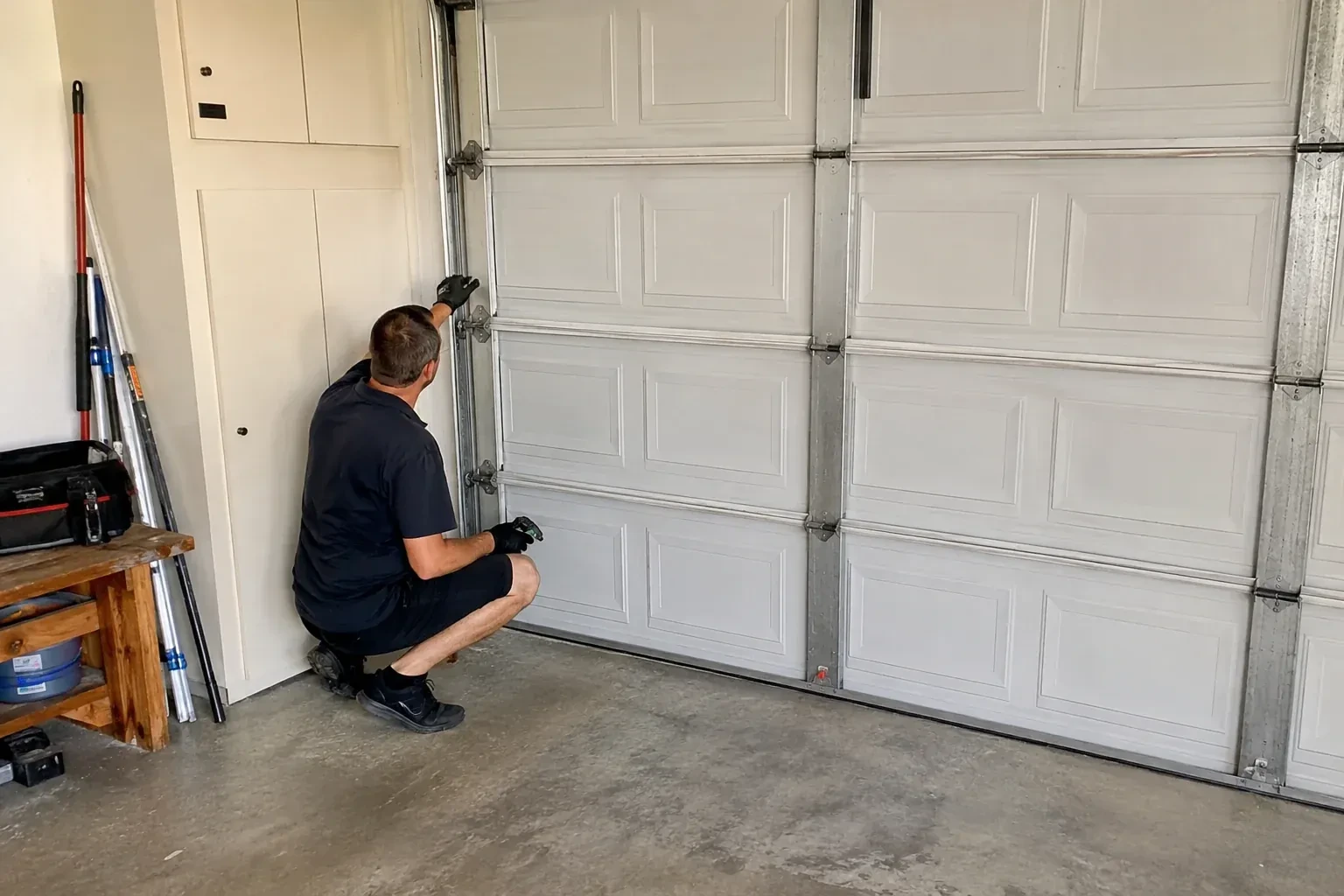
The route is the same and the counterbalance looks different. Extension springs stretch beside the horizontal tracks and pull through pulleys, so the technician examines each spring for stretch and a broken end, each pulley for a grooved wheel or a seized bearing, the cable clips, and whether a containment cable runs through the centre of each spring. Balance, reversal and photo-eye tests are unchanged. Garage Door Safety Inspection
What happens if a broken spring is found during the tune-up?
The door is left closed and not operated with the opener, because a door with a broken spring weighs its full weight and can drop. The technician explains what was found, shows you the break, and quotes the spring replacement as its own job, usually replacing both springs on a two-spring door so they wear evenly. The rest of the tune-up either waits or continues on the parts that can safely be serviced with the door down. Garage Door Tune-Up
Can a door frozen to the floor really cause this?
Yes, and in winter it is one of the most common causes. Meltwater under the bottom seal refreezes overnight and bonds the door to the slab. The opener pulls, the door stays put, the cables go slack and unwind off their drums, and when the ice lets go the door lurches up unevenly. Freeing the seal by hand before using the opener on icy mornings prevents almost all of these calls. Off-Track Garage Door Reset
How do I know whether the damage is only cosmetic?
Watch the door move. A cosmetic dent leaves the section flat at the joints, the door travelling without a catch, and the hinges and rollers seated normally. Signs that the damage goes further include a crease that reaches a joint or stile, a hinge screw that has pulled out, a roller sitting crooked in the track, a gap of daylight at a joint, or a shudder as that section reaches the track curve. Any of those calls for a proper assessment. Garage Door Panel Replacement
Springs & Hardware
How many ball bearings should a roller have?
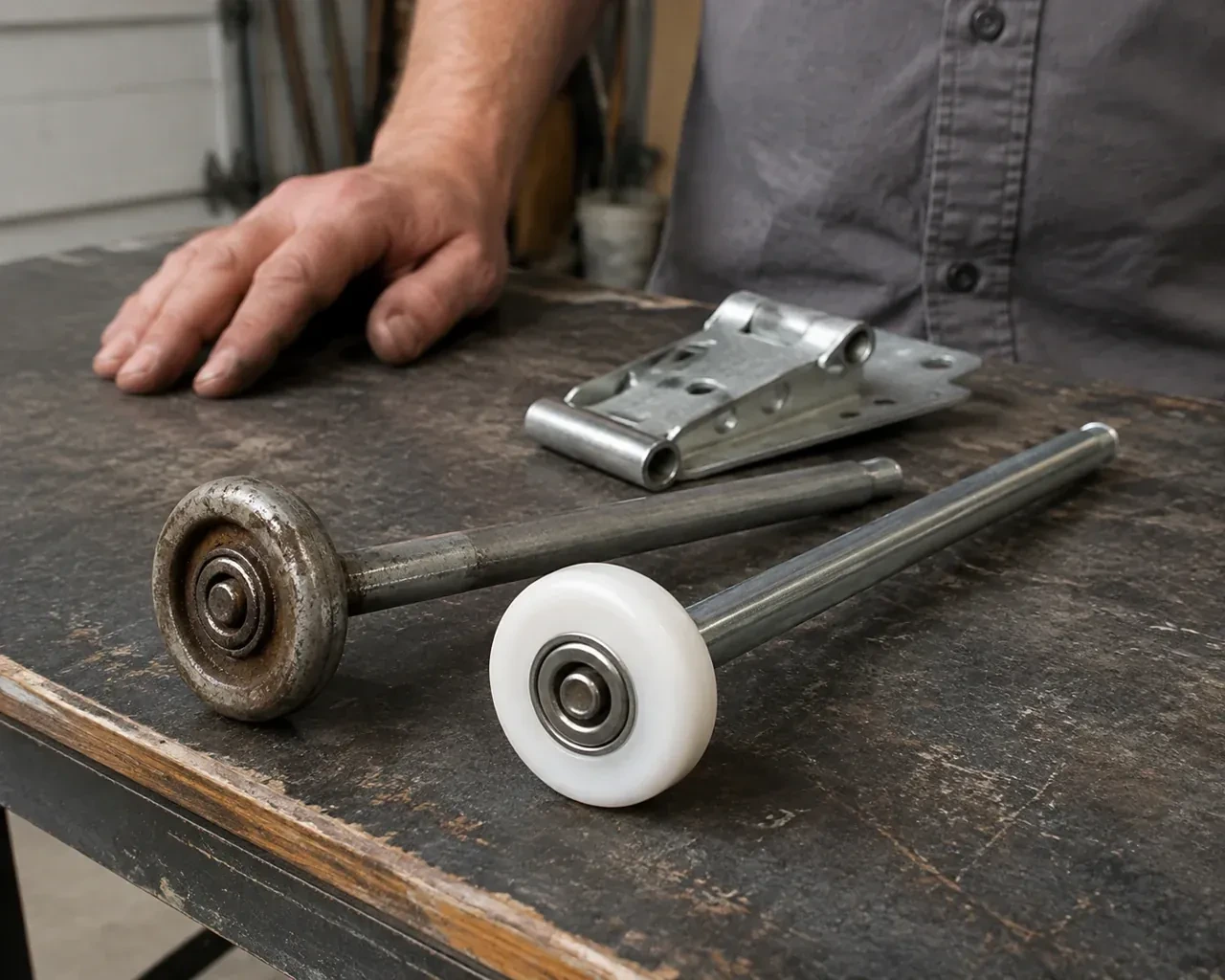
More bearings spread the door's weight over more contact points, but count alone does not decide how smoothly, quietly or long a roller runs; the complete design matters more. Budget rollers carry six or seven, better residential rollers ten to thirteen, and premium rollers use a sealed cartridge with a dust and moisture seal. For an ordinary residential door, a nylon roller with ten or more bearings is a sound choice; for a damp or salty garage, or a door used constantly, sealed bearings are worth asking about. Garage Door Roller Replacement
Why does the door pop or click at the same spot every time?
A noise at a fixed height points at the joint passing through the curve at that moment. A cracked hinge leaf flexing open and snapping back, a pin rocking in a worn hole, or a roller stem shifting in a loose hinge all make a sharp report as the load transfers. Because it always happens at one place, the technician can go straight to that joint and usually finds the hinge or roller responsible. Garage Door Hinge Replacement
My door rubs the frame on one side. Is that a track problem?
Often, yes. The vertical track is meant to stand a fraction further from the jamb at the top than the bottom, so the closed door seals on its stop and swings clear as it rises. If a bracket has loosened or the track was set flat to the wood, the door drags along the stop moulding every trip. Resetting the spacing and taper, and tightening the brackets into sound wood, usually ends the rub. Garage Door Track Repair or Replacement
Can I lift the door by hand while a cable is off?
Leave it. With one cable slack the door is being carried on one side only, so it is unbalanced and may bind or drop unevenly when moved. The technician arrives with clamps and a method for taking the door's weight before anything is moved, and that is the moment to lift it. Until then a stationary door is exactly what you want. Garage Door Cable Replacement
Openers & Access
Which parts most often need replacing on an opener?
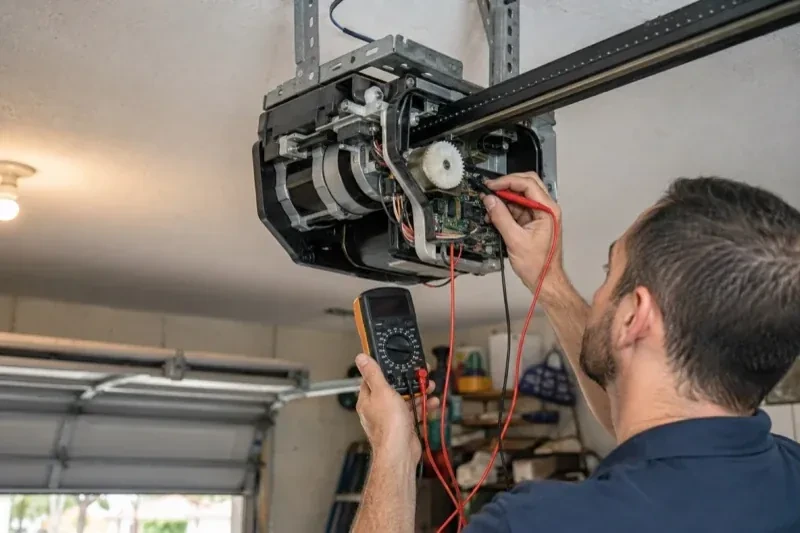
The list is short and familiar: the drive gear and sprocket on chain-drive units, the start capacitor on AC motors, the photo-eye pair and its wire, the trolley and carriage, the wall control, the remotes and their batteries, the light socket, and on newer units the battery backup pack. Logic boards and motors are replaced less often and weighed against the unit's age. Most of the common items are carried to the visit. Garage Door Opener Diagnosis and Repair
What is the trolley, and why would it get stuck?
The trolley is the carriage that rides along the rail, pulled by the chain, with the door arm hooked to it. It gets stuck when the travel limits creep and it is driven onto the stop bolt at the head end or the stop tab at the door end, where the motor hums but nothing moves. The technician slackens the chain, runs the trolley off the stop under power, and pulls the limit back so it stops short in future. Chain-Drive Opener Repair
How long does a belt-drive repair take?
A tension adjustment with the safety tests is a short visit. Replacing the belt, trolley or idler pulley, then phasing the motor, relearning limits and running the reversal tests, is usually an hour or two. A gear-and-sprocket kit at the motor head takes longer because the head unit is opened. If the balance test turns up spring work, that is agreed as a separate job with its own time. Belt-Drive Opener Repair
Will a new opener make the door quieter?
A belt or direct drive with a soft-start DC motor removes most of the operator's own noise, and a level, well-tensioned rail removes the rattle. The door contributes its own sound through rollers, hinges and springs, so the technician looks those over during the balance check and can fit nylon rollers or fresh hinges at the same time. Together the two changes turn a morning rumble into a hum. Garage Door Opener Replacement
Installation & Upgrades
Can the replacement be coordinated with a renovation?
Yes. Share plans for cladding, trim, lighting, ceiling storage, electrical work and floor changes before measurement. Their sequence may affect finished opening dimensions or track clearance. The door proposal can then state which conditions must be complete, who handles each preparation item and when final measurements are taken for the order. Sectional Garage Door Replacement
Can I keep the garage door opener I already have?
Possibly, after its identity, condition and compatibility are checked against the new door. The installer reviews door height and weight, track layout, reinforcement, attachment geometry, travel limits, controls and safety sensors. The door is balanced and operated manually before any opener is connected. If the existing unit fits the documented requirements, it can be integrated and tested as part of the installation scope. Insulated Steel Garage Door Installation
Can a wind-rated door include windows?
Yes, when glazing is part of the selected configuration. Window size, position, retainers, and the surrounding section construction may affect the reinforcement layout, so the desired design is chosen before ordering. Factory-prepared glazed sections keep appearance, strength, sealing, and documentation aligned rather than turning windows into an alteration after installation. Wind-Rated Garage Door Replacement
Why is spring and cable work handled by trained technicians?
Springs store the force that offsets the door's weight, and lift cables transfer that force through drums or pulleys. Installation requires the door to be secured, the correct components identified and tension applied with purpose-made tools. A trained method keeps the loaded system controlled while balance, cable seating and attachment points are adjusted together for the completed door. Carriage-House Garage Door Installation
On-site assessment preferred
Request a visit
Let us take a look. Tell us what the door is doing.