Huttonville Door Specialists
Issue 1 of 3Garage DoorsBrampton, Ontario
Garage Door Track Repair or Replacement: what the visit covers
The bottom foot of a garage door track has a hard life in this climate.
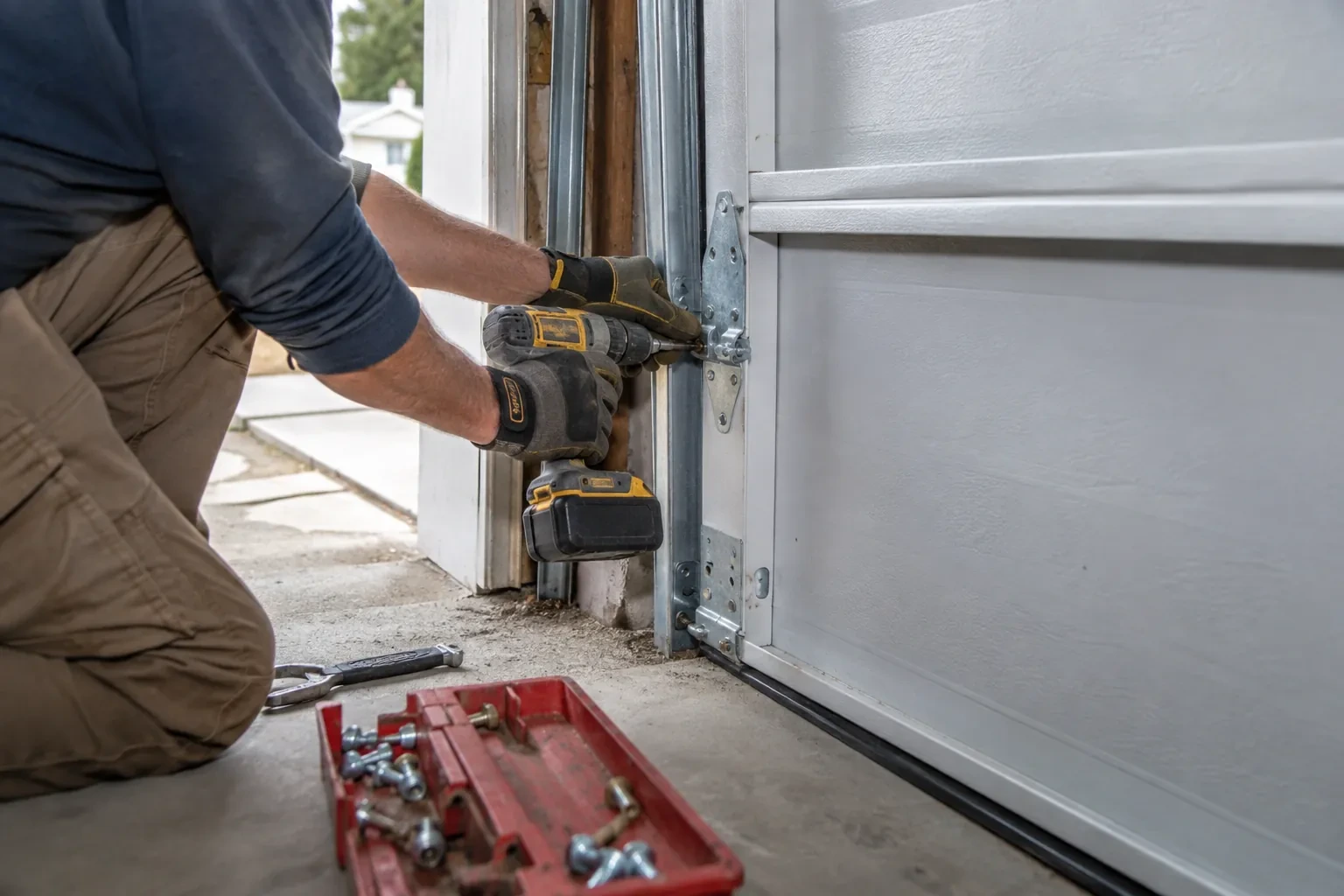
The bottom foot of a garage door track has a hard life in this climate. Slush and salt drip off the car and pool exactly where the bottom rollers sit, the jamb brackets and channel rust and thin, and a ridge of ice at the threshold can stop the door short while the opener keeps pulling. Winter track repair often means replacing the lowest section of vertical track and its brackets, sistering a jamb that has gone soft at the floor, and refixing everything into sound wood. A clear threshold and a look at the brackets each spring keep the new steel in good shape.
Rollers, hinges and top fixtures along the path
With the door held, the technician works along both sides checking how each roller sits. A roller should rest in the channel without being pinched, and its stem should turn and slide in the hinge or bracket that carries it. A stem that is stuck, a wheel riding up on the lip, or a roller that has popped free are signs of a spread or misaligned section nearby. Worn wheels are also a cause rather than just a casualty, since a roller that no longer rolls drags on the track edge and slowly opens it. The top fixtures are checked for bending, and hinges for splits, so the parts that guided the door into trouble are corrected with the track.
Renewing the curve or the horizontal run
Overhead work starts with the springs unloaded, since the flag bracket carrying the end bearing plate has to come loose for the curve to change. The technician fits a curve of the same radius so the door meets the horizontal run at the same height, then hangs a new or straightened horizontal track from back hangs screwed into joists, not drywall, with a stiffening angle along its length. The rear of each run is set level with its partner, or to the same pitch, and square to the vertical track, and the two hangers are adjusted until a straightedge across the pair reads true. A bent hanger is replaced rather than bent back.
Protecting the bottom of the track from salt and slush
The lowest foot of vertical track and the bracket beside it are where winter does its damage, so a little attention there pays off. Push slush away from the inside edge of the door rather than letting it pool against the track, and when a mild day comes, rinse or wipe the road salt off the bottom brackets and the channel. A dab of silicone spray on the jamb bracket fasteners in late autumn helps them shed meltwater. Keep the threshold clear of packed ice so the door meets the floor, not a ridge, and the opener never pulls against a stuck door. Those habits are what keep replacement track from meeting the fate of the last set.