Huttonville Door Specialists
Issue 3 of 3Garage DoorsBrampton, Ontario
Garage Door Roller Replacement: what to note first
The door shudders as it rises, worst where the track bends from vertical to horizontal.
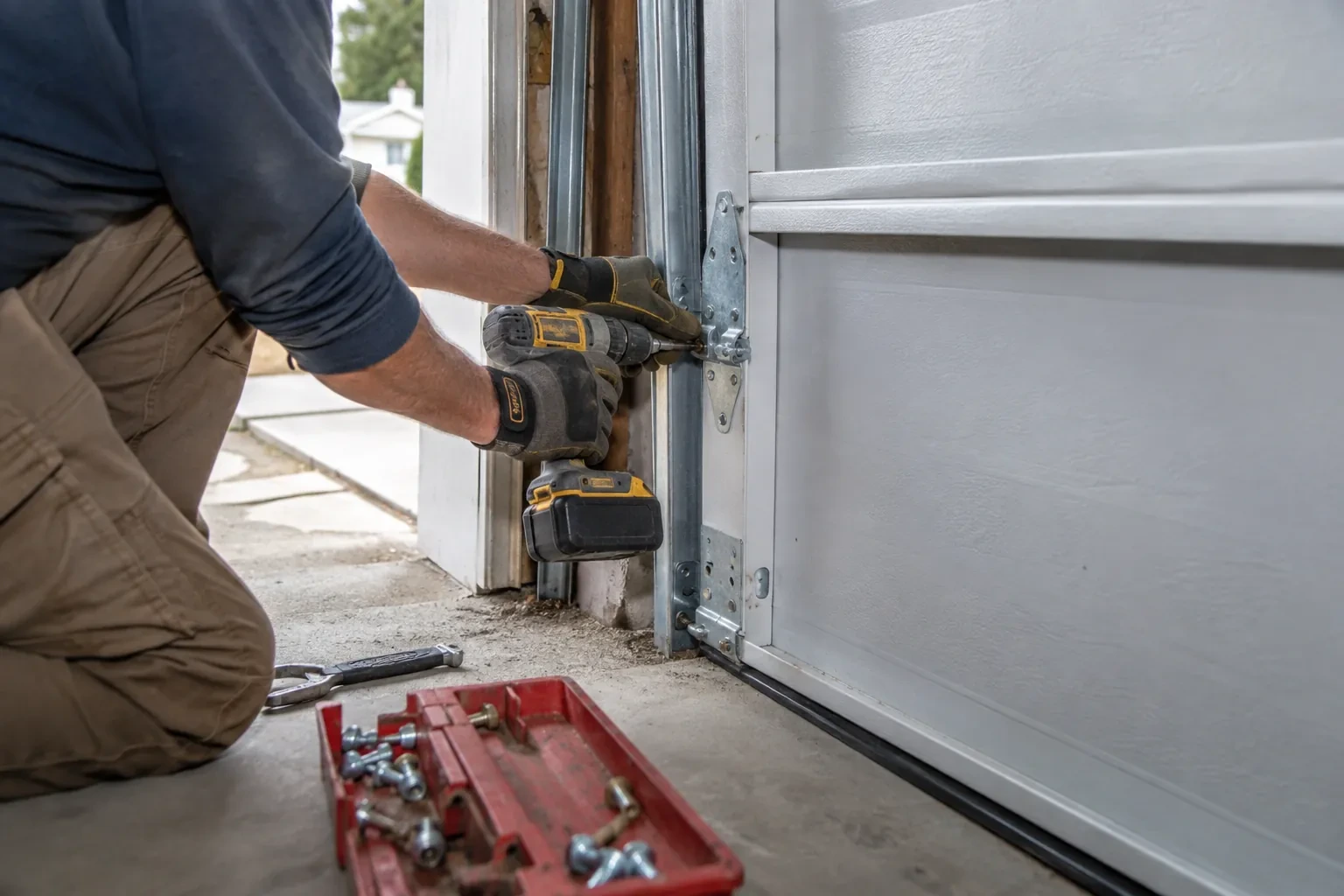
The door shudders as it rises, worst where the track bends from vertical to horizontal. Watching from inside, you can see one section rock from side to side while the others sit still, and the whole door lands with a clunk.
Worth answering before the call
Can we reach both tracks, or is there shelving or a car in the way? Does the door stay put at halfway when the opener is released? Is there rust, slush or salt residue in the bottom of the track?
My door is heavy insulated steel. Which rollers suit it?
A heavier door needs rollers with a load rating to match, generally ball-bearing rollers rated around seventy-five to one hundred pounds each rather than the light plastic wheels many doors ship with. It often needs long-stem rollers at the double hinges on the end stiles, and the top rollers, which travel furthest under load, deserve the sturdiest in the set. Nylon with ten or more bearings suits most insulated residential doors; very heavy or commercial-weight doors may still call for steel.
Should I replace rollers when the springs are replaced?
It is a common and sensible pairing. Rollers and springs are the two most frequently replaced parts on a door and wear on similar timelines, so a door that has used up its springs has usually worn its rollers too. Doing both in one visit means the door is secured and the opener disconnected once, and the bottom brackets, which are handled for spring work anyway, receive new rollers while they are accessible. Ask for the rollers to be checked whenever spring work is booked.