Springs · Brampton
Garage Door Balance Adjustment in Brampton
Released from the opener, the door will not hold anywhere. Lift it to hip height, take your hands away, and it sinks back to the concrete, gathering speed on the way down.
Garage Door Balance Adjustment
In plain words
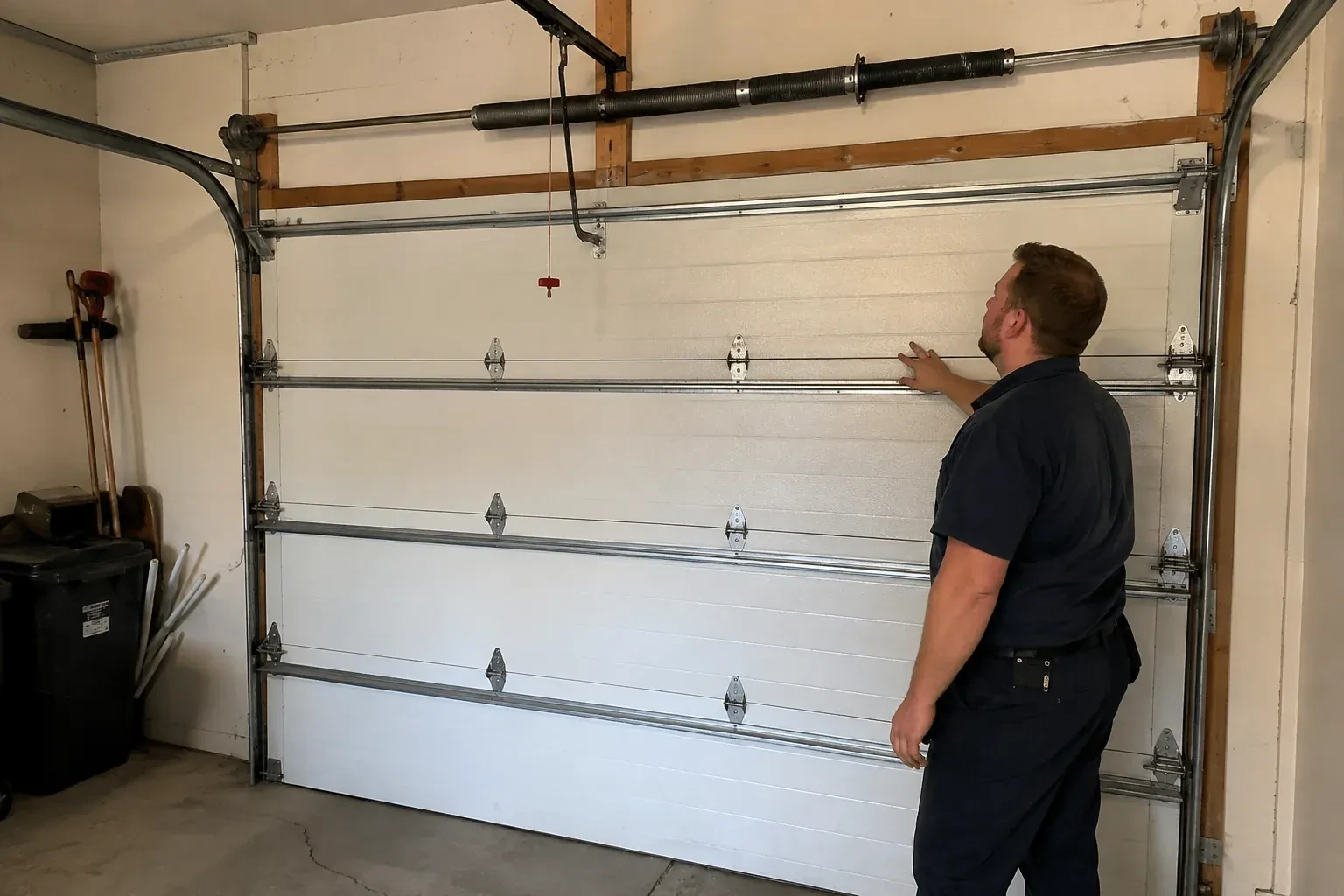
The whole service is built around one simple test that door manufacturers and safety bodies describe the same way. With the opener released, the door is lifted by hand to roughly a metre off the floor and let go. A balanced door stays where it is. One that drifts upward is carrying too much spring tension; one that sinks is carrying too little. The technician reads that behaviour at several heights, checks the door is level across its width, and then adjusts the counterbalance a quarter turn at a time, testing to the manufacturer's specified height and tolerance, until the door meets that standard and moves smoothly.
How the visit goesWith the door closed, daylight shows under one bottom corner and the seal is squashed flat at the other. As it rises, the left side leads by an inch or two, and the top section twists slightly as it turns into the horizontal track.
Brampton
How the visit goes
Friction along the path
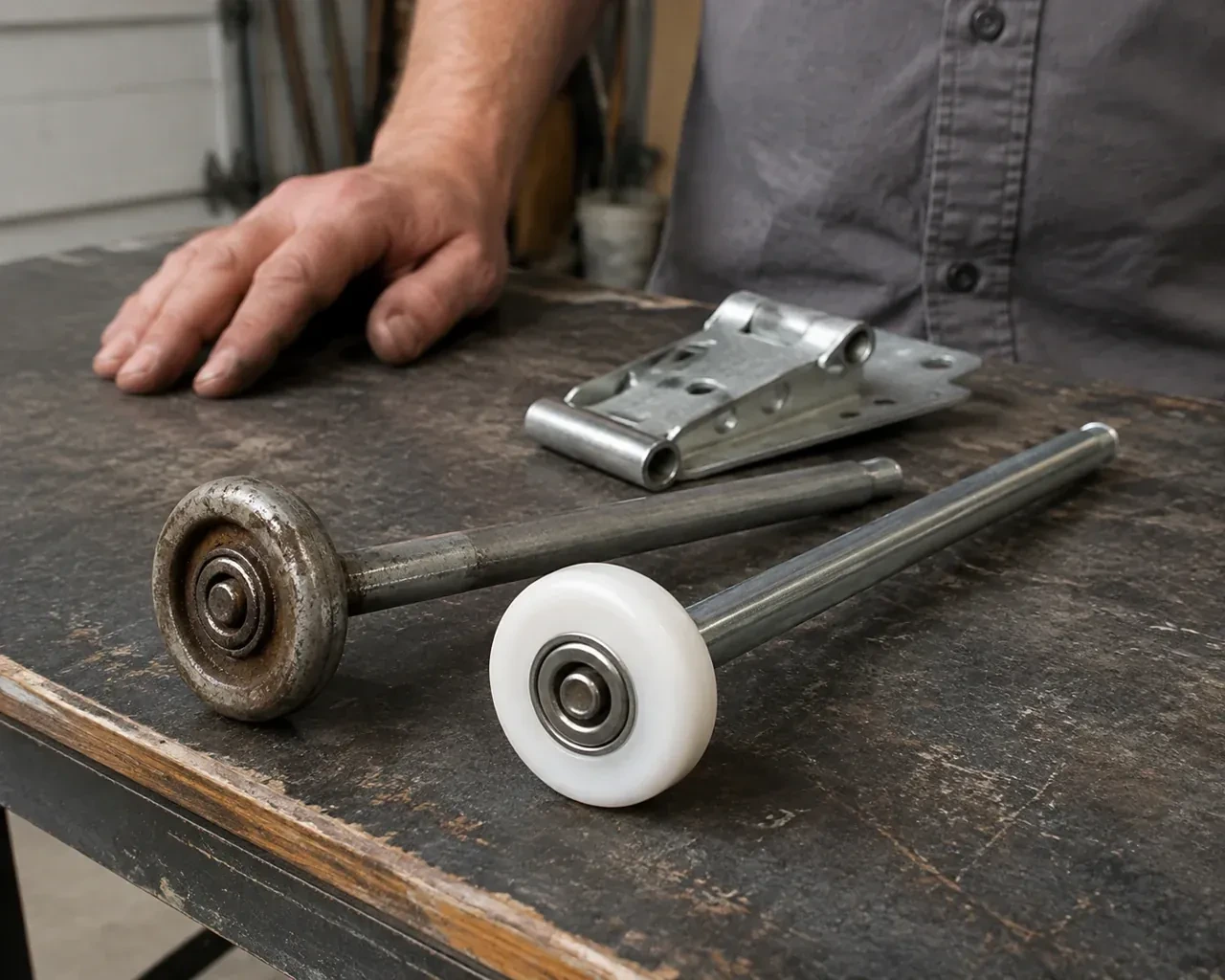
Some doors that feel heavy are not short of spring tension at all; they are dragging. The technician runs a hand and an eye along the vertical and horizontal tracks for dents, misaligned joints and brackets that have pulled away from the jamb, spins each roller to find seized bearings or cracked wheels, and flexes each hinge for play or splits. Dry, worn rollers alone can add real effort to every lift. Binding at one point in the travel, rather than heaviness everywhere, is the signature of a friction problem, and correcting it first means the springs are then adjusted to the door's true weight rather than to the drag.
Proving the result with the safety tests
The visit is finished only when the standard tests pass. The technician places a piece of two-by-four flat on the floor in the door's path and closes it with the wall button; the door must strike the wood and return to fully open. Then, with the door closing again, an object is passed through the photo-eye beam, and the door must reverse. Finally the door is released once more and the hand test repeated so you can see it hold at knee height, at waist height and fully open. These are the same checks the door industry's own maintenance checklist uses, and you are welcome to watch each one.
Watching for the early signs of drift
You will now know what the door feels like when it is right, which makes small changes easy to spot. A door that begins to close with a heavier thud, an opener that pauses at the top or hums a little longer, a gap appearing under one corner, or a door that no longer quite stays fully open when released are all early signs. Cold weather can make the door feel a little heavier for a few weeks without anything being wrong. But a door that stalls, races or no longer passes its balance check is telling you to stop using it and book an inspection promptly rather than waiting out the season, since the cause is not always minor.
Garage Door Balance Adjustment
In the van
- Door scale
- Garage-door lubricant
- Replacement hinges
- Nylon or steel rollers
- Containment cables
What affects the quote
Same fees day, night or weekend
1Torsion or extension springs
Winding a torsion spring with bars and moving an extension spring's hook are different procedures with different setup, and the type of counterbalance on your door is the first thing that shapes the quote.
2Door height and lift type
Taller doors and high-lift or vertical-lift hardware carry more spring turns and different drums, so setting and testing them takes longer than a standard seven-foot door.
3Extension-spring containment and pulleys
On an extension door, a missing containment cable is added and worn pulleys are replaced with the adjustment. Each is a small parts line on the quote.
Garage Door Balance Adjustment: questions
What is the red cord hanging from the opener for?
It is the manual release. Pulling it disconnects the door from the opener's trolley so the door can be moved by hand, which is how the balance test is done and how you get the car out during a power cut. The industry standard calls for it to be red and reachable, no more than about six feet above the floor. Reconnecting is usually as simple as running the opener once.
How is door balance tested?
With the door closed, the opener is released so the door is free. It is lifted by hand to about a metre, then to fully open, and let go at each point. A door in balance holds its position; one that rises on its own is over-tensioned and one that drops is under-tensioned. The door should also move freely and no faster than the hand pushing it.
Should I lubricate anything after the visit?
A little, twice a year. Use a product sold for garage doors on the spring coils, hinge pins, roller stems, bearings and bracket pins, and cycle the door a few times to work it in. The tracks want a wipe, not a spray, because a slick track lets the rollers skid and gathers grit. Skip thick grease. Low friction is what lets the springs' setting hold true.
Springs & Hardware
- Garage Door Hinge ReplacementAfter a cold night the bottom seal had frozen to the slab.
- Garage Door Track Repair or ReplacementAfter a decade of slushy winters the bottom foot of the track is flaking rust.
- Garage Door Cable ReplacementThe door went up as usual this morning, then stopped a third of the way with one corner higher than…
Garage Door Balance Adjustment near you
The services below are the ones we perform most often for garage doors in Brampton. Springs and cables top the list, followed by opener repairs, roller and hinge replacement, seal and weatherstrip work, balance and safety adjustments, remote programming and, when the time comes, new doors.