Openers · Brampton
Garage Door Opener Diagnosis and Repair in Brampton
Nothing. No light, no click, no hum from the unit on the ceiling.
Garage Door Opener Diagnosis and Repair
In plain words
Every diagnosis ends with the same two tests, because an opener that moves the door is only half fixed. First, a length of 2x4 is laid flat on the floor under the centre of the door and the door is closed onto it; it must reverse on contact and return to fully open. Second, with the door closing, an object is passed through the photo-eye beam near the floor; the door must stop and reverse. These tests are how the opener standard defines a working unit, and they are how the technician proves that the fault found was the fault fixed.
How the visit goesIt is a January morning and the door lifts about a hand's width, groans, and settles back down. When you pull the release and try by hand the door feels far heavier than it used to, and the bottom seal is stuck hard to the slab.
Brampton
How the visit goes
From motor to trolley
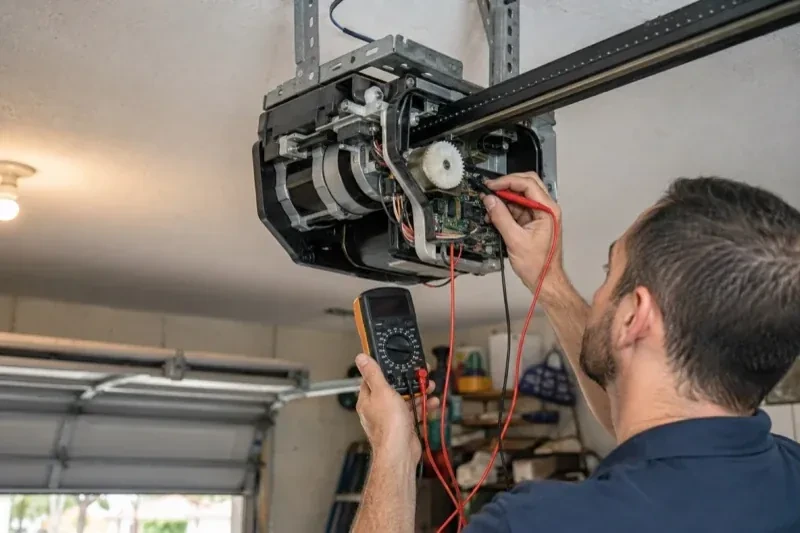
Behind the cover of the head unit and along the rail sits the drive train: motor, capacitor on AC models, drive gear, sprocket, and then the chain, belt or screw that moves the trolley. The technician listens first, because sounds are specific. A hum with no motion suggests a capacitor or a stripped gear; a motor that runs while the trolley slides alone points to a disengaged carriage or a broken drive; a grinding start followed by silence is a worn gear finishing its life. Then the parts are inspected directly: gear teeth, sprocket, chain tension, belt condition, trolley wear, and the coupling between rail and head.
Capacitor and motor work
On an AC opener that hums and clicks but never turns, the start capacitor is the first suspect. It is discharged, tested and replaced with one of the same rating, a routine job that returns a dead-sounding opener to normal in many cases. If the motor still fails to turn with a good capacitor, the technician checks for a seized shaft, burnt windings or a failed thermal cut-out, and confirms the motor is not simply being stalled by a locked or bound door. A motor replacement is weighed against the age of the unit and the availability of the part, and that judgement is explained before any decision.
A door that answers every control
Before the technician leaves, the door is run from each control you own: the wall console, each remote, the keypad and any phone connection. You watch it open fully, close to a gentle seal and stop in the right places. The opener light and indicator are explained so you know what normal looks like, and any code that appeared during the diagnosis is shown cleared. You also see the reversal tests done in front of you, so you know the door will back off a 2x4 and stop for a beam interruption. Watching the system pass gives you confidence that the repair addressed the real cause.
Garage Door Opener Diagnosis and Repair
In the van
- Bell wire and clips
- Wall control
- Chain or belt
- Trolley and carriage
- Transformer and board fuse
What affects the quote
Same fees day, night or weekend
1Battery backup pack
DC openers with backup power carry a battery that ages like any other. If it is at the end of its life, its replacement is listed separately from the diagnosis.
2Season and weather
A frozen seal, a stiff door and an unheated garage in the cold months add steps to a diagnosis, such as freeing the door and re-lubricating for low temperatures, and the quote allows for them.
3Condition of the mounting
A rail that has sagged, a header bracket pulling out of the wall, or ceiling angle iron that has loosened must be re-secured before the opener is set up, and that hardware work is itemized.
Garage Door Opener Diagnosis and Repair: questions
Which parts most often need replacing on an opener?
The list is short and familiar: the drive gear and sprocket on chain-drive units, the start capacitor on AC motors, the photo-eye pair and its wire, the trolley and carriage, the wall control, the remotes and their batteries, the light socket, and on newer units the battery backup pack. Logic boards and motors are replaced less often and weighed against the unit's age. Most of the common items are carried to the visit.
The motor hums but the door stays put. What is usually wrong?
A hum with no movement means the motor is receiving power but something is stopping it turning, or stopping its turn from reaching the door. On AC units a failed start capacitor is the common cause; on chain-drive heads a stripped nylon drive gear is the other. Less often the trolley has simply been released from the carriage. Each of these is a routine repair once identified, and the hum is one of the more helpful sounds an opener makes.
The wall button works but none of my remotes do. What happened?
Three things account for most of these. The wall control has been put into lock mode, sometimes by a child or a visitor, which blocks all remotes until it is released. The opener's memory was cleared, usually by someone pressing the learn button while trying to program a new remote, so every remote needs programming again. Or the receiver in the head unit has failed. The first two are simple settings; the third is a part.
Openers & Access
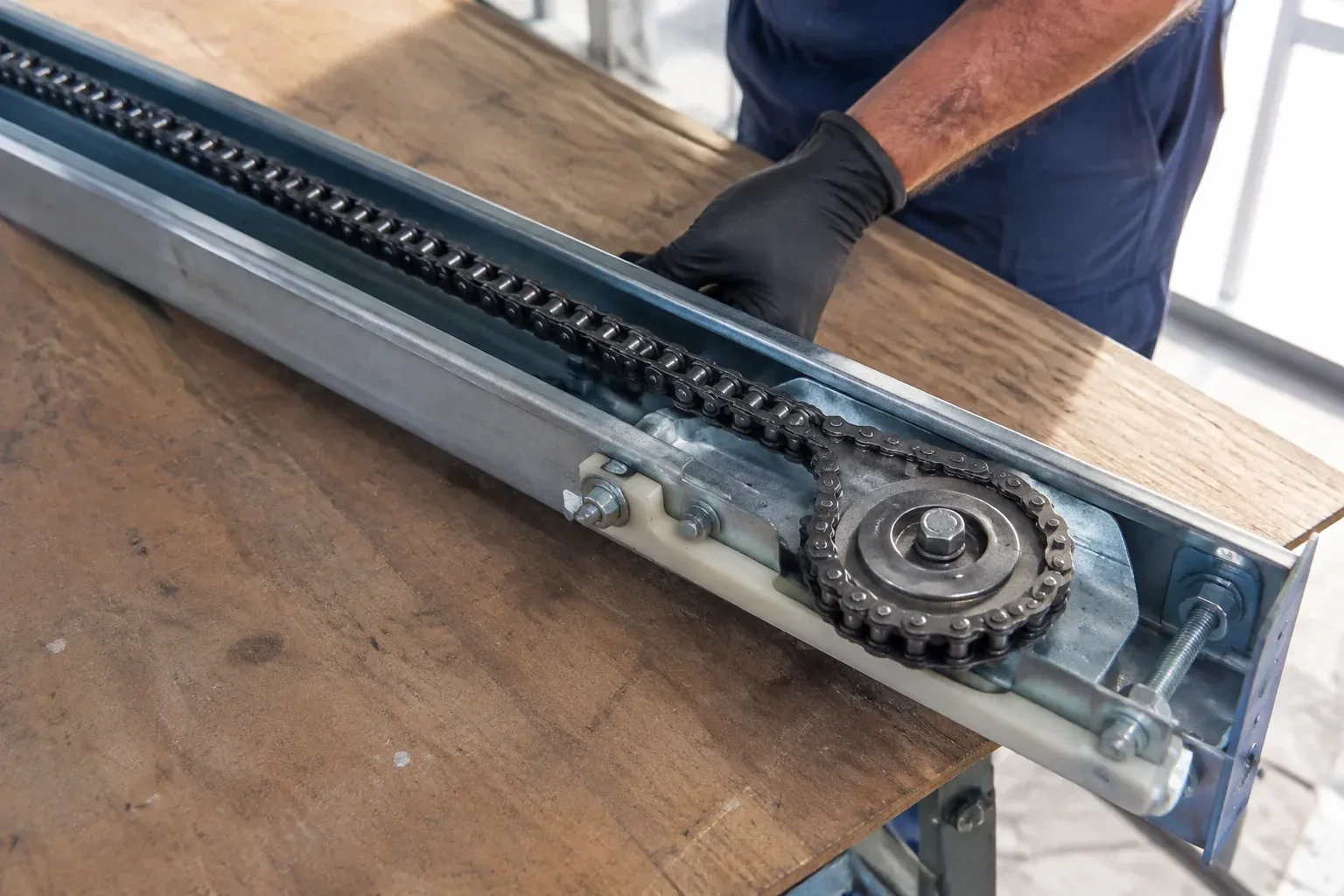
- Belt-Drive Opener RepairThere is a new squeal from the front of the rail, up near the header, on every cycle.
- Garage Door Opener ReplacementYou swapped the old wooden door for a heavier insulated steel one, and the twenty-year-old opener…
- Photo-Eye Sensor Alignment or ReplacementSomeone backed the car in a little too far, a bin or a bicycle brushed the track, and since then…
Garage Door Opener Diagnosis and Repair near you
The services below are the ones we perform most often for garage doors in Brampton. Springs and cables top the list, followed by opener repairs, roller and hinge replacement, seal and weatherstrip work, balance and safety adjustments, remote programming and, when the time comes, new doors.